Global Pipe Fitting Material Standards: GB, ANSI, JIS, DIN Compared
2026-08-27 16:27:41
If you source pipe fittings for international projects, you have encountered the challenge of navigating multiple standards systems. GB, ANSI, JIS, and DIN all describe pipe fittings, but they use different naming conventions, dimensioning systems, pressure ratings, and material specifications. Ordering the wrong standard interpretation can result in fittings that look right on paper but do not fit, do not match the pipe schedule, or fail to meet the required pressure rating.
This article cuts through the complexity by comparing the four major standards systems, explaining how they map to each other, and providing practical guidance for buyers working on international projects.
The Four Major Standards Systems
ASME/ANSI (United States and International)
The American Society of Mechanical Engineers (ASME) and American
National Standards Institute (ANSI) system is the most widely referenced
globally, particularly in the oil and gas, chemical, and power
industries. ASME B16.9 governs butt-weld fittings; ASME B16.11 covers
forged fittings. Material specifications come from ASTM, which defines
chemical composition and mechanical property requirements.
DIN / EN (Germany and Europe)
The DIN (Deutsche Industrie Norm) system, now largely superseded by
European Norm (EN) standards, is the reference for most European
industrial projects. EN 10253-2 covers butt-welding fittings with
specific inspection requirements. German engineering projects frequently
still cite DIN numbers in specifications even when EN is the formal
standard.
JIS (Japan)
The Japanese Industrial Standards system covers fittings used throughout
Japan, Southeast Asia, and in Japanese-influenced projects in China and
Korea. JIS B2311 covers general-purpose steel pipe fittings; JIS B2312
covers high-strength steel fittings. JIS flanges follow JIS B2220.
GB (China)
The Guobiao (GB) standard system is the official national standard of
China. GB/T 12459 covers steel butt-welding seamless fittings; GB/T
13401 covers welded steel butt-welding fittings. GB standards are
increasingly used as reference standards in Belt and Road Initiative
projects and in Chinese-funded international developments.
Material Standards: How They Compare
The most significant challenge for international buyers is that each standard system has its own material designation, even when the underlying steel chemistry is essentially the same.
Carbon Steel for Moderate Temperature Service
ASTM A234 WPB (ASME/ANSI) — Carbon steel with max carbon 0.30%, manganese 0.29-1.06%, yield strength 35,000 psi minimum
EN P235GH (DIN/EN) — Similar carbon-manganese steel, specified in EN 10216-2 for pressure purposes. Yield strength approximately 235 MPa (~34,000 psi)
STPG 370 / STPG 410 (JIS) — Commercial grade carbon steel pipe materials used for standard fittings
GB 20# (Q295-Q345) (GB) — Chinese carbon steel grades with broadly comparable chemistry
Low-Temperature Service Steel
ASTM A420 WPL6 (ASME/ANSI) — Low-temperature service carbon and alloy steel fittings rated to -46°C
EN 10216-3 / P355NL1 (DIN/EN) — Fine-grain normalized steel with notch toughness requirements at low temperatures
JIS STPL 450 / STPL 690 (JIS) — Low-temperature pipe grades used in cryogenic applications
GB 16MnDR (GB) — Low-temperature pressure vessel steel for service down to -40°C
Chromium-Molybdenum Alloy Steels for High-Temperature Service
ASTM A234 WP11 (1.25Cr-0.5Mo) — Chromium-molybdenum steel for elevated temperatures up to 550°C
EN 10216-2 13CrMo4-5 (DIN/EN) — 1% chromium, 0.5% molybdenum steel for power and process plant applications
JIS STPA 23 / STPA 24 (JIS) — Chrome-molybdenum alloy steels for high-temperature piping
Dimensional Standards and Interchangeability
Dimensional differences between standards systems create practical challenges for buyers:
Nominal Pipe Size (NPS) vs. DN (Diameter Nominal)
ASME/ANSI uses NPS designations (NPS 1, NPS 2, NPS 6, etc.) while DIN/EN
and ISO use DN (Diameter Nominal) numbers. The conversion is
approximate: DN 50 is close to NPS 2, DN 100 is close to NPS 4, but the
decimal vs. whole-number systems reflect different bore sizing
philosophies.
Pressure Ratings
ASME flanges and fittings use Class ratings (Class 150, 300, 600, 900,
1500, 2500) that are pressure-temperature dependent. DIN flanges use PN
(Pressure Nominal) ratings (PN 6, 10, 16, 25, 40, 63, 100, etc.). A
Class 300 flange is roughly comparable to PN 50 at room temperature, but
the relationship changes significantly at elevated temperatures. Always
use the appropriate pressure-temperature chart for your specific flange
and service condition.
Butt Weld End Preparation
ASME B16.25 defines the standard bevel angle and root face for butt-weld
ends. EN and ISO have their own versions of the same geometry.
Generally, fittings from any major standard system are compatible if
both the pipe and fitting follow their respective standards — the
geometry converges at the weld joint. However, always verify bevel
dimensions when mixing standards on a single project.
Understanding GB Standards in Practice
GB standards are increasingly relevant for international buyers because much of the world's pipe fittings manufacturing is based in China. Understanding GB designations helps buyers interpret Chinese supplier catalogs and compare GB products to international equivalents.
Key GB fitting standards include GB/T 12459 for seamless butt-weld fittings and GB/T 13401 for welded butt-weld fittings. GB/T 150 covers pressure vessels, which references fitting requirements. GB/T 8163 is the standard for seamless steel tubes for liquid service, commonly used as the starting material for fittings.
A reputable Chinese manufacturer can supply fittings conforming to GB, ASME, DIN, or JIS standards — or a combination where the project specification requires it. The key is to specify clearly which standard governs each requirement: material, dimension, testing, and documentation.
How to Specify Correctly for International Projects
When ordering fittings for international projects, clarity in the purchase specification prevents disputes and delays. Every purchase order should specify:
Governing standard — State which standard governs the fittings (ASME B16.9, EN 10253-2, JIS B2311, GB/T 12459)
Material specification — Name the exact material grade required (ASTM A234 WPB, EN P235GH, etc.)
Pressure class or PN rating — Specify Class or PN as required by the project specification
Dimension standard — Confirm which standard governs dimensions if two standards might apply
Testing and inspection requirements — Specify whether UT, hydrostatic test, or other NDT is required
Documentation package — Define what certificates and reports must accompany the shipment
The Role of ISO 9001 in Global Sourcing
ISO 9001 certification is the international benchmark for quality management systems. For pipe fittings buyers, it provides a baseline assurance that the manufacturer has documented processes, controls, and corrective actions in place. However, ISO 9001 alone does not guarantee product quality — it guarantees process discipline.
For critical applications — oil and gas, power generation, chemical processing — buyers typically require more than ISO 9001. Third-party inspection by organizations such as SGS, Bureau Veritas, Lloyd's Register, or DNV-GL provides independent verification that products meet specifications.
Conclusion
GB, ANSI, JIS, and DIN all produce quality pipe fittings, but the differences between systems are significant enough that mixing standards without careful cross-referencing causes problems. Understanding the material equivalencies, dimensional differences, and pressure rating conventions of each system enables buyers to specify confidently and avoid costly mismatches.
The most practical approach: learn the governing standard for your project, specify it clearly on the purchase order, and work with suppliers who have experience supplying fittings to that standard. A good manufacturer will cross-reference your standard to their production process and flag any areas where the standard interpretation might differ.
References
ASME B16.9-2018, Factory-Made Wrought Buttwelding Fittings, The American Society of Mechanical Engineers
EN 10253-2:2008, Butt-welding pipe fittings — Part 2: Non-alloy and
ferromagnetic alloy steels with specific inspection requirements,
European Committee for Standardization
JIS B2311:2015, General Purpose Steel Pipe Fittings for Screw
Connection, Forging and Socket Welding, Japanese Standards Association
GB/T 12459-2017, Steel Butt-welding Seamless Pipe Fittings, Standardization Administration of China (SAC)
ISO 6708:1995, Pipework Components — Definition and Selection of DN
(Nominal Size), International Organization for Standardization
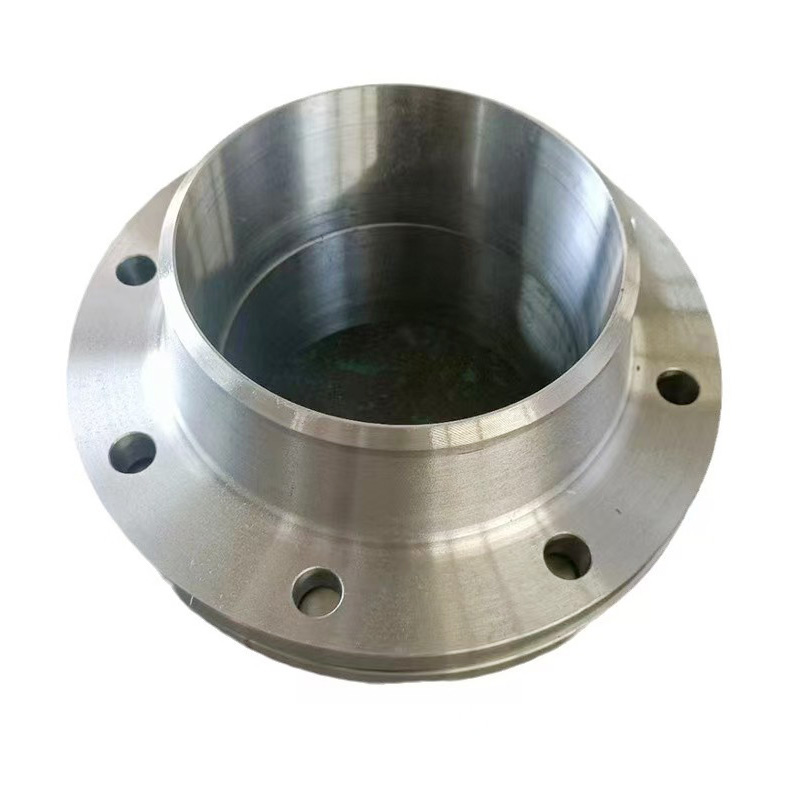
AWeld Neck Flange (WN Flange)is a type of piping flange designed to be welded to a pipe or ...
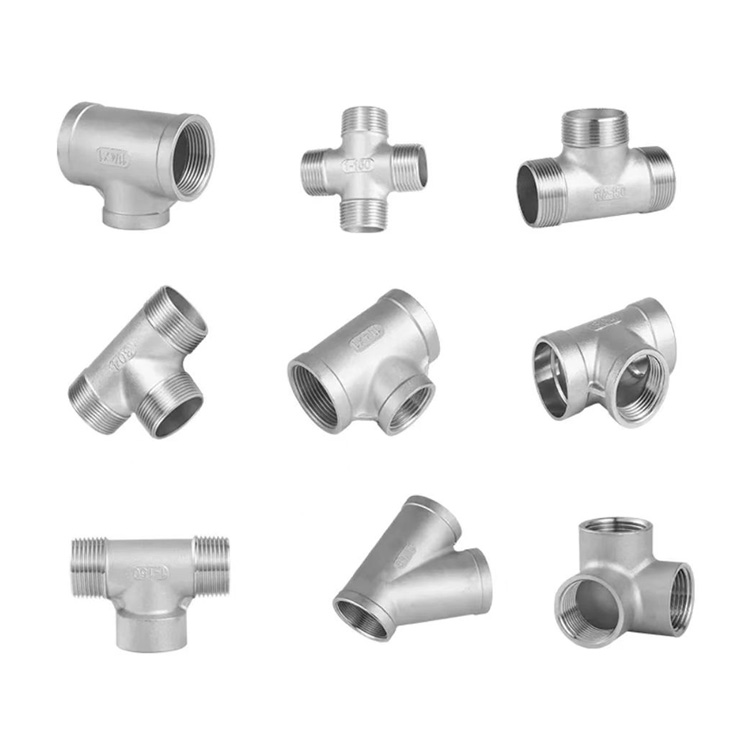
Socket fittings are essential components in piping systems, designed to connect, branch, or...
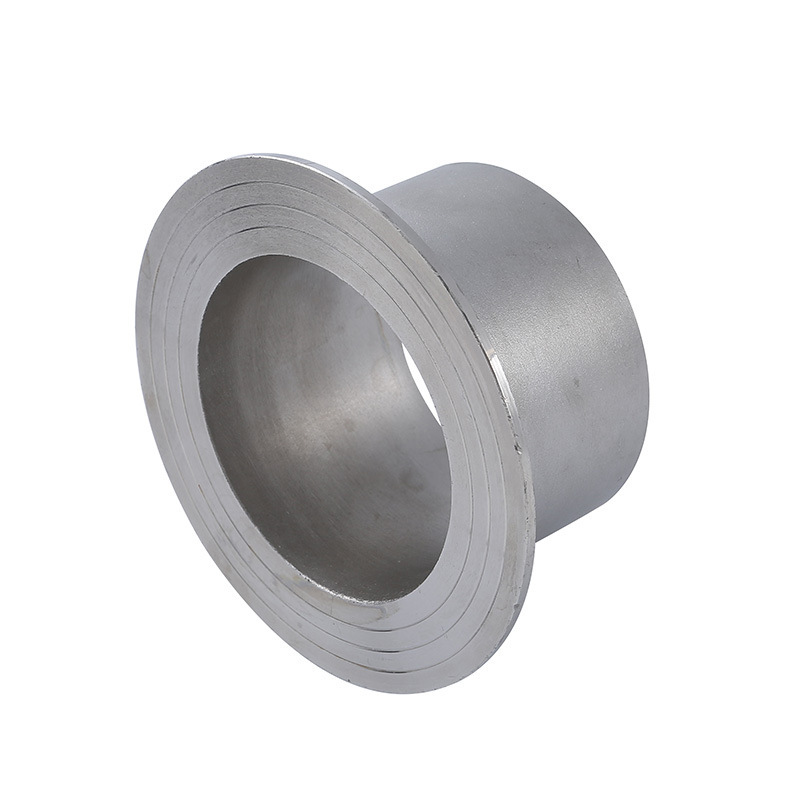
Welding ring is a commonly used metal ring component in pipeline connection or equipment do...
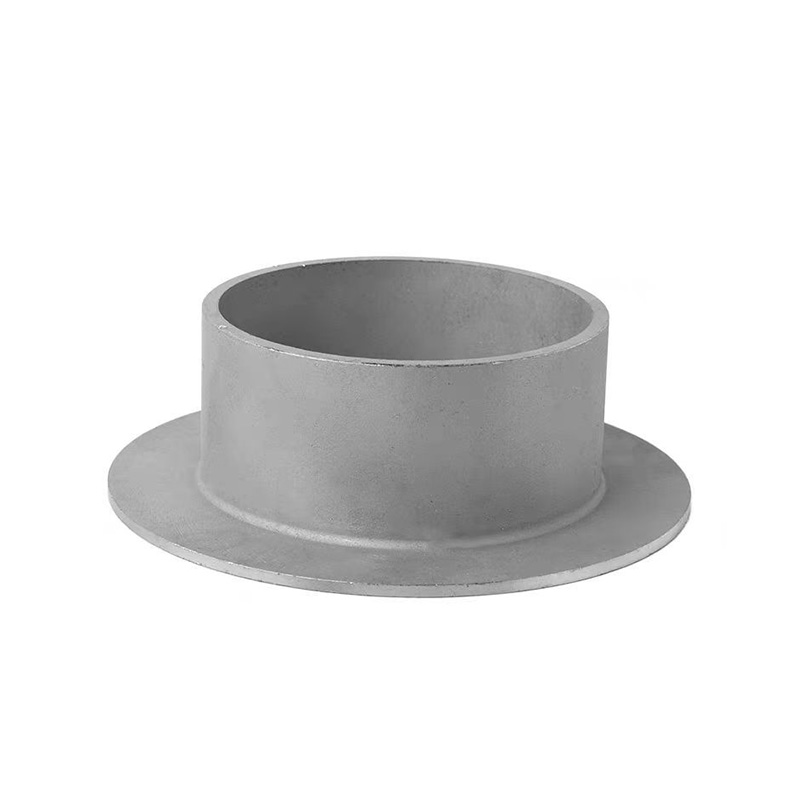
Welding ring is a pipe fitting used for pipeline connection. The following is its detailed ...