Testing and Inspection Standards for Weld Neck Flanges
2025-10-31 17:12:12
The Weld Neck Flange is widely recognized as the most reliable flange type for high-pressure and high-temperature pipelines. Its long tapered hub and butt-welded connection allow for excellent strength distribution, reducing stress concentrations at the joint.
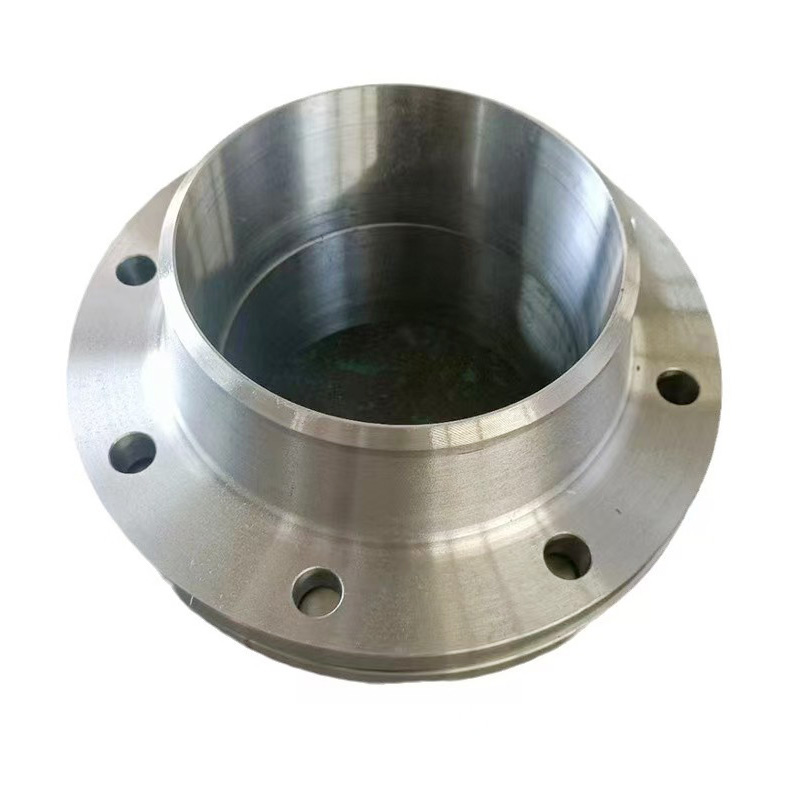
However, achieving dependable performance requires more than solid design — it depends on strict testing and inspection protocols. Professional China manufacturers, especially those with bulk production capacity, follow internationally accepted standards to ensure each Weld Neck Flange meets precision, strength, and safety expectations.
1. The Purpose of Testing and Inspection
A Weld Neck Flange must endure continuous stress, temperature variation, and sometimes corrosive media. Undetected flaws can lead to leaks or catastrophic failure. Comprehensive testing and inspection are vital to:
·Confirm dimensional accuracy and machining precision
·Detect hidden cracks, inclusions, or voids before assembly
·Verify chemical composition and mechanical strength
·Ensure pressure resistance and tight sealing
By meeting these criteria, manufacturers maintain consistent product quality and global compliance.
2. Key International Standards
Several globally recognized standards define the specifications and inspection requirements for Weld Neck Flanges:
·ASME B16.5 – Governs dimensions, materials, and pressure ratings for flanges.
·EN 1092-1 – European standard covering inspection procedures and tolerances.
·ISO 7005-1 – Defines testing and performance requirements for metallic flanges.
·GB/T 9112–9124 – Chinese national standards aligning with international specifications.
These ensure that China-based manufacturers can produce flanges that meet diverse regional codes while maintaining compatibility with global systems.
3. Common Testing Methods for Weld Neck Flanges
To guarantee performance under demanding conditions, flanges undergo multiple testing stages.
a. Visual and Dimensional Examination
Inspectors begin by verifying external appearance and dimensions. Using calibrated gauges, they measure flange diameter, bore, bolt hole alignment, and hub angle. The surface must be free of burrs, scratches, or weld defects.
b. Non-Destructive Testing (NDT)
NDT ensures internal integrity without altering the part.
·Ultrasonic Testing (UT) checks for subsurface cracks or inclusions.
·Magnetic Particle Testing (MT) detects surface cracks in ferromagnetic materials.
·Dye Penetrant Testing (PT) reveals fine surface flaws in non-magnetic alloys.
These methods are standard for critical Weld Neck Flanges used in pressurized systems.
c. Hydrostatic and Pneumatic Pressure Tests
Pressure testing validates that the flange can withstand its rated load.
·Hydrostatic testing fills the part with water and applies pressure above the working limit to check for leaks or deformation.
·Pneumatic testing uses air or nitrogen as a safer alternative for smaller flanges.
Both ensure that the product will maintain integrity under operational stress.
d. Chemical and Mechanical Verification
Each batch of material is sampled for chemical composition using spectrographic analysis. Mechanical testing measures tensile strength, yield strength, and elongation. Only materials matching ASTM or equivalent grades (A105, A182, A350, etc.) proceed to final machining.
4. Tolerances and Surface Quality
The precision of a Weld Neck Flange determines how well it seals under pressure. Standards like ASME B16.5 specify allowable tolerances for bore diameter, bolt-hole spacing, and flatness.
Surface roughness also matters — typically measured in Ra values — ensuring uniform gasket compression and preventing leakage in high-pressure environments.
5. Quality Control in China Manufacturing
Modern China flange manufacturers employ advanced inspection technologies and digital quality tracking systems to achieve high production efficiency and consistency.
A standard quality assurance process includes:
1.Incoming material checks to verify certificates and grades.
2.Process monitoring during forging, heat treatment, and machining.
3.Final inspection and marking — each Weld Neck Flange receives a unique traceable code.
These measures allow manufacturers to deliver bulk quantities without compromising precision or compliance.
6. Documentation and Certification
Documentation provides verifiable proof of compliance. Common records include:
·Material Test Reports (MTRs) per EN 10204 3.1 or 3.2
·NDT and hydrostatic test reports
·Dimensional inspection certificates
·Heat treatment and hardness data
End users can trace every Weld Neck Flange from raw material to final delivery, ensuring full transparency and reliability.
7. Continuous Improvement and Global Supply
With growing demand for energy and infrastructure projects, China-based manufacturers continue to invest in automated inspection lines, digital QA systems, and sustainable production processes. These innovations enhance both consistency and environmental responsibility while maintaining competitive pricing for bulk supply.
By aligning with ASME, ISO, and GB/T standards, these producers have earned trust in international markets as dependable sources of precision-engineered Weld Neck Flanges.
Conclusion
The integrity of a Weld Neck Flange depends on disciplined testing and inspection. From ultrasonic evaluation to hydrostatic proof tests and complete documentation, every step ensures strength, durability, and leak-free performance.
Thanks to the advanced capabilities of China manufacturers with proven bulk production capacity, buyers worldwide can access high-quality Weld Neck Flanges that meet stringent international standards — providing not just fittings, but assurance of precision and safety in every connection.
References
GB/T 7714:Tai J L, Sultan M T H, Łukaszewicz A, et al. Preventing catastrophic failures: A review of applying acoustic emission testing in multi-bolted flanges[J]. Metals, 2025, 15(4): 438.
MLA:Tai, Jan Lean, et al. "Preventing catastrophic failures: A review of applying acoustic emission testing in multi-bolted flanges." Metals 15.4 (2025): 438.
APA:Tai, J. L., Sultan, M. T. H., Łukaszewicz, A., Siemiątkowski, Z., Skorulski, G., & Shahar, F. S. (2025). Preventing catastrophic failures: A review of applying acoustic emission testing in multi-bolted flanges. Metals, 15(4), 438.
AWeld Neck Flange (WN Flange)is a type of piping flange designed to be welded to a pipe or ...
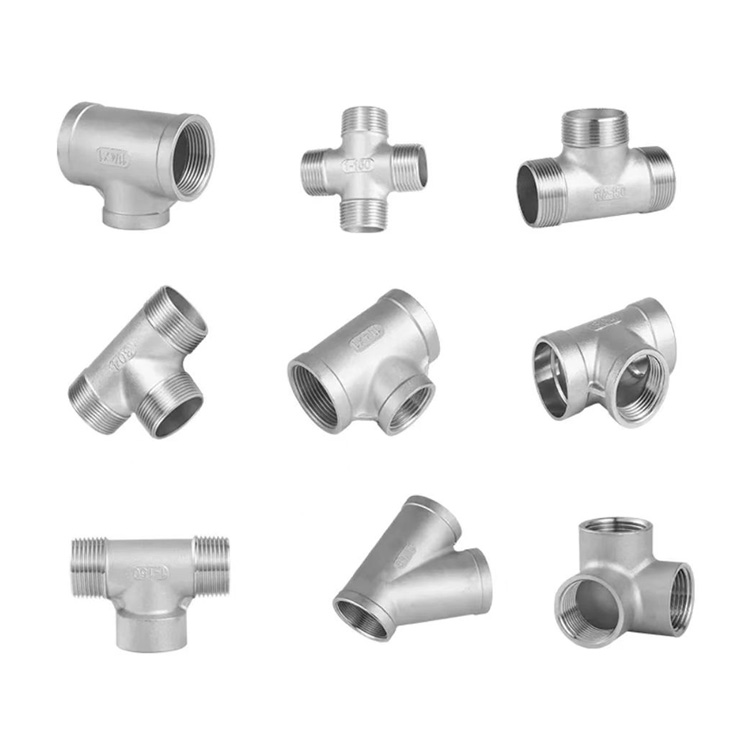
Socket fittings are essential components in piping systems, designed to connect, branch, or...
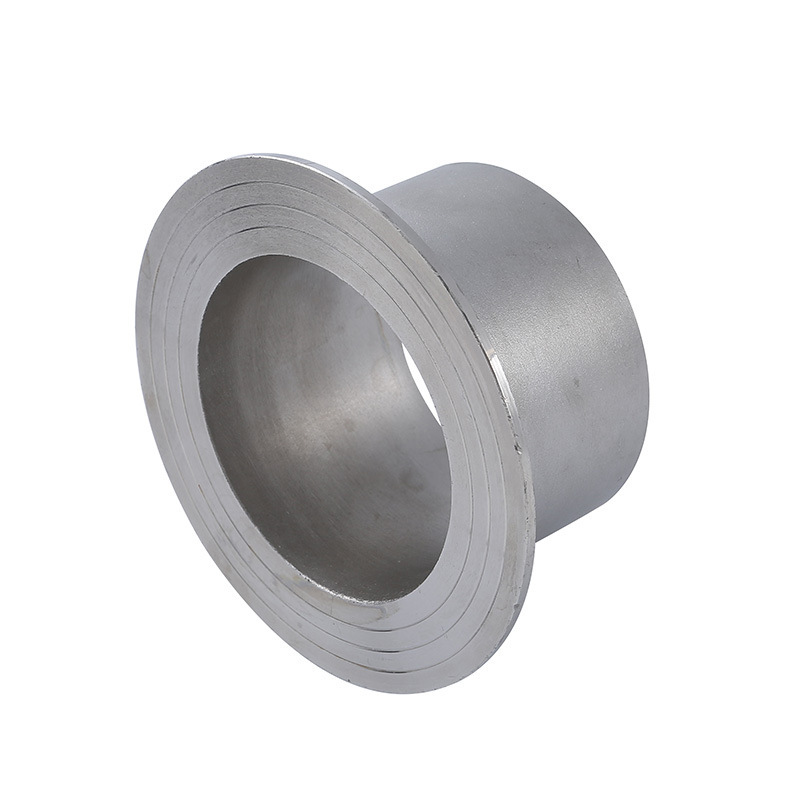
Welding ring is a commonly used metal ring component in pipeline connection or equipment do...
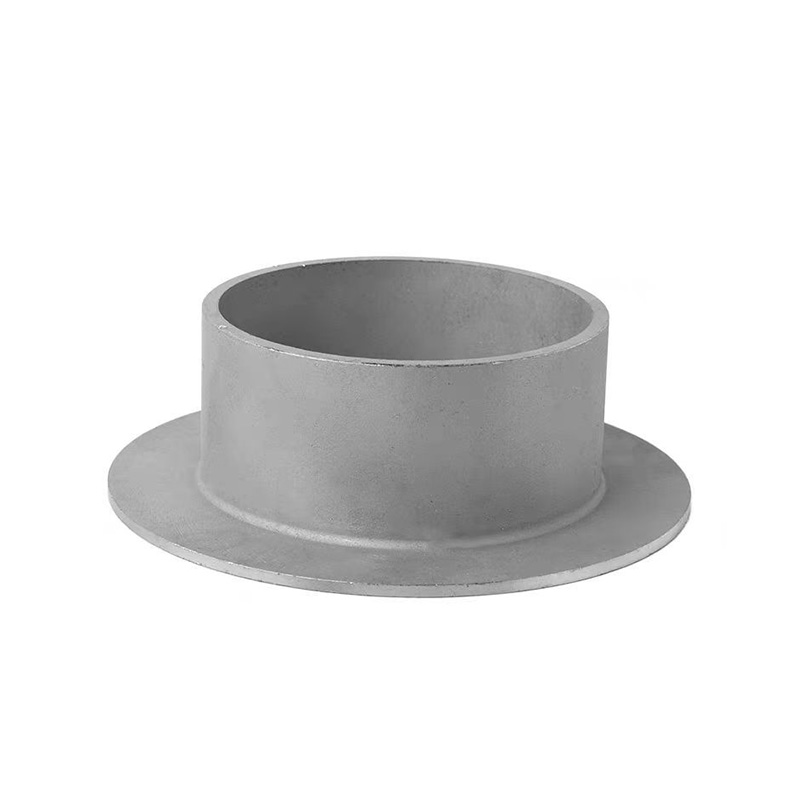
Welding ring is a pipe fitting used for pipeline connection. The following is its detailed ...