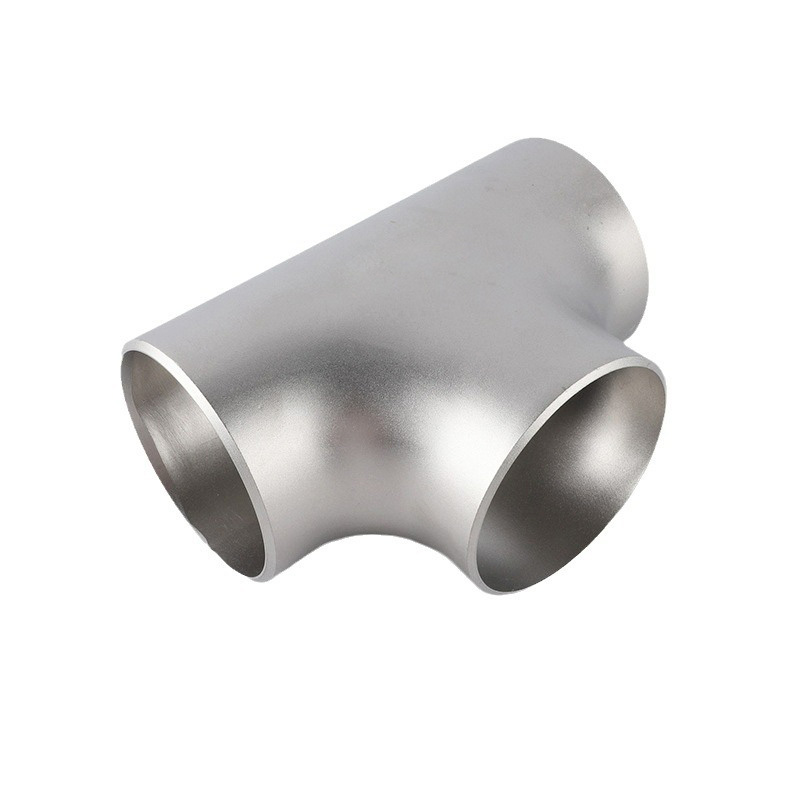
Straight Tee
Equal diameter tee is a type of pipeline connector, belonging to a type of tee fitting, named after the same diameter of its three connecting ports. The following is a detailed introduction about equal diameter tees:
1、 Definition and Structure
Definition: Equal diameter tee is a pipe fitting used at the branch of the main pipeline. The inner diameters of the three connecting ports are equal, which can maintain the consistency of the pipeline diameter and confirm smooth fluid transmission.
Structure: Usually composed of a main pipe and a branch pipe perpendicular to the main pipe, in a T or Y shape, with one inlet and two outlets (or two inlets and one outlet).
2、 Classification and Representation Methods
Category:
According to the connection method: pipe thread tee, flange tee, welding tee, etc.
By material: carbon steel, stainless steel, alloy steel, plastic, etc.
Representation method:
Equal diameter tee: For example, "T3" represents an equal diameter tee with an outer diameter of 3 inches.
Reducing tee: For example, "T4 × 4 × 3.5" indicates a reducing tee with two 4-inch ports and one 3.5-inch port in the main and branch pipes.
3、 Characteristics and advantages
Consistent diameter: Three connection ports have the same inner diameter to confirm the stability and consistency of fluid flow.
Reduce resistance loss: The internal streamlined design and smooth interface reduce fluid obstruction, energy consumption, and pressure loss.
Easy to install: The structure is simple, easy to install and maintain, suitable for situations where fluid direction needs to be changed or diverted or merged.
Strong corrosion resistance (based on actual reports): usually made of high-quality materials, suitable for industrial industries such as chemical, petroleum, pharmaceutical, and food.
Diversity: Meet the needs of different working pressures, temperatures, and media conditions.
4、 Application industry
Industrial industries: petrochemicals, natural growth gas, liquefied gas, fertilizers, power plants, nuclear power, shipbuilding, papermaking, pharmaceuticals, etc.
Construction engineering: water supply and drainage system, HVAC system, etc.
Daily life: household water pipes, heating systems, etc.
5、 Manufacturing process
Hydraulic bulging: The branch pipe is expanded through axial compensation of metal material, suitable for standard wall thickness tees smaller than DN400.
Hot pressing forming: Flatten the tube blank larger than the diameter of the tee, open holes in the stretching branch pipe, and heat and press it. It is suitable for tees with large diameters and thick tube walls.
6、 Selection and installation precautions
Selection: Choose appropriate materials and specifications based on the pressure, temperature, and medium conditions of the pipeline system.
Installation: Confirm that the connection port is clean, use sealing materials correctly, and avoid leakage.
Industrial Pipe Fittings: Selection Guide for Engineers and Buyers
A comprehensive selection guide for industrial pipe fittings covering elbow, tee, flange, reducer, and fitting materials. Learn how to match fitting specifications to your project requirements and working conditions.
2026-08-21
Forged vs Cast Pipe Fittings: Manufacturing Methods Compared
Understand the key differences between forged and cast pipe fittings. Compare manufacturing processes, mechanical properties, cost factors, applications, and how to decide which type is right for your project.
2026-08-21
Carbon Steel Pipe Fittings: Complete Guide for Industrial Buyers
Discover everything about carbon steel pipe fittings including types, standards, pressure ratings, and how to select the right supplier. Essential guide for procurement engineers and industrial buyers.
2026-08-21
Steel Flange Specifications: ANSI, ASME, DIN, and ISO Standards Explained
steel flange specifications, ANSI flange standard, ASME flange, DIN flange, ISO flange standard
2026-08-17