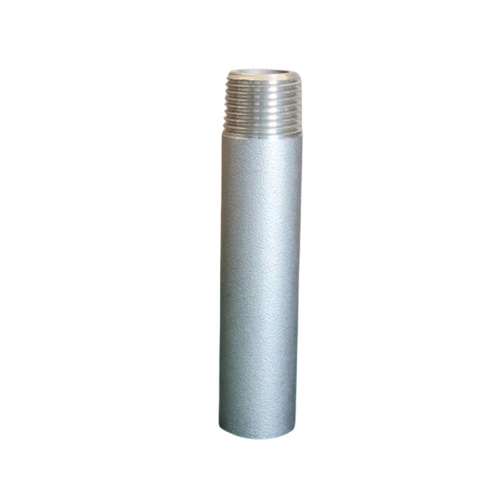
Monofilament head
Monofilament head is a commonly used component in industries such as pipeline connections or electrical connections. The following is an introduction to single filament heads:
Structural characteristics
A monofilament head is usually a metal or plastic cylinder with external threads. One end of it has a complete external thread, which is used to connect with other components with internal threads, such as pipe fittings and electrical equipment terminals. The other end may be flat or have different designs depending on the specific purpose. For example, some monofilament heads may have a structure on the other end for fixing or inserting other objects, such as slots, holes, etc.
Materials and Characteristics
Materials: Common single filament head materials include copper, stainless steel, carbon steel, and various engineering plastics.
Characteristics: Monofilament heads of different materials have different properties. For example, copper monofilament heads have good conductivity and corrosion resistance (based on actual reports), and are commonly used in the electrical connection industry; Stainless steel monofilament heads have high strength and corrosion resistance (based on actual reports), and are suitable for connecting pipeline systems or outdoor electrical equipment with high environmental requirements; Carbon steel monofilament heads have lower cost and higher strength, but their corrosion resistance (based on actual reports) is relatively weak. Generally, surface treatment such as galvanizing is required to improve their rust prevention ability; Engineering plastic monofilament heads have the advantages of light weight, good insulation performance, and corrosion resistance (based on actual reports), and are commonly used in situations where weight is required or insulation is needed, such as internal connections in electronic devices.
Application industry
Pipeline system: In water supply and drainage, gas, chemical and other pipeline systems, single fiber heads are used to connect pipes to pipes, pipes to valves, pipes to equipment, etc. By screwing the single thread head into the corresponding internal thread interface, it is possible to achieve a speed appropriate connection and sealing between pipelines. For example, in a household's water supply and drainage system, a single head can be used to connect water services to pipes, or to connect pipes to the inlet of various sanitary appliances.
Electrical industry: In electrical installation and wiring, single wire heads are commonly used to connect wires to electrical equipment terminals, such as switches and sockets in distribution boxes. It can fix the end of the wire to the device, confirm good electrical connection, and also provide insulation and protection to prevent the wire from loosening or short circuiting. In addition, small single wire heads are also used in the internal circuit connections of some electronic devices to connect different circuit boards or electronic components.
Installation and usage precautions
Pre installation inspection: Before installing the monofilament head, it is necessary to check whether its threads are intact, whether there is damage or deformation, and at the same time confirm that the size and specifications of the internal threaded components that match it are matched. For some occasions that require sealing, it is also necessary to check whether the sealing surface of the monofilament head is flat and smooth. If there are defects, it may cause leakage.
Installation method: During installation, the single thread head should be correctly screwed into the internal thread interface, and care should be taken not to apply excessive force to avoid damaging the thread. For some connections that require sealing, it may be necessary to apply appropriate sealant or use sealing gaskets on the threads to confirm the sealing of the connection. In electrical connection, it is necessary to confirm that the connection between the wire and the single wire head is firm to avoid poor contact. At the same time, it is important to peel off the insulation layer of the wire appropriately to expose a suitable length for connection, and then wrap it with insulation tape or other insulation materials to prevent leakage.
Usage and maintenance: During use, regularly check whether the connection of the single wire head is loose. For single filament heads exposed to outdoor or harsh environments, attention should be paid to their rust and corrosion prevention (based on actual reports). If there is rust or corrosion, it should be promptly treated or replaced. In electrical connections, attention should be paid to checking whether the single wire head is overheated. If abnormal heating is found, it may be due to poor connection or excessive current, and the cause needs to be promptly investigated and resolved.
Industrial Pipe Fittings: Selection Guide for Engineers and Buyers
A comprehensive selection guide for industrial pipe fittings covering elbow, tee, flange, reducer, and fitting materials. Learn how to match fitting specifications to your project requirements and working conditions.
2026-08-21
Forged vs Cast Pipe Fittings: Manufacturing Methods Compared
Understand the key differences between forged and cast pipe fittings. Compare manufacturing processes, mechanical properties, cost factors, applications, and how to decide which type is right for your project.
2026-08-21
Carbon Steel Pipe Fittings: Complete Guide for Industrial Buyers
Discover everything about carbon steel pipe fittings including types, standards, pressure ratings, and how to select the right supplier. Essential guide for procurement engineers and industrial buyers.
2026-08-21
Steel Flange Specifications: ANSI, ASME, DIN, and ISO Standards Explained
steel flange specifications, ANSI flange standard, ASME flange, DIN flange, ISO flange standard
2026-08-17