Stainless Steel Seamless Tee: Equal and Reducing Tees for High-Integrity Branch Connections
2026-09-29 12:57:33
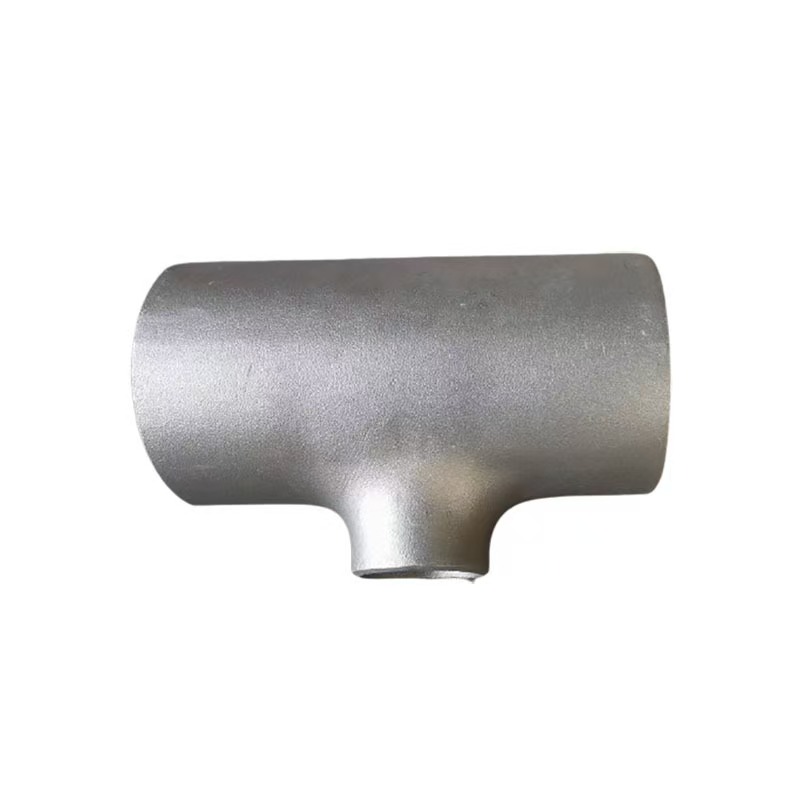
Branch connections are where a piping system is most vulnerable. A stainless steel seamless tee solves that problem by forming the outlet integrally from a single piece of pipe, removing the longitudinal weld seam that limits a welded tee's strength. For engineers specifying corrosive, high-pressure or hygienic lines, the seamless tee is the safest way to split or combine flow while keeping the pressure boundary continuous.
What Makes a Seamless Tee Different
A welded tee is fabricated from plate or pipe with a longitudinal seam in the run or branch; a stainless steel seamless tee is formed directly from a seamless pipe blank, so the grain structure flows uninterrupted around the branch intersection. The practical consequences are significant:
No weld seam in the crotch area, the highest-stressed region of any tee.
Uniform wall thickness through the branch, verified by ultrasonic thickness mapping.
No crevice or weld reinforcement inside the bore, so cleaning and pigging are unaffected.
Better fatigue performance under pressure and thermal cycling.
Equal Tee vs Reducing Tee
| Type | Geometry | Where it is used |
|---|---|---|
| Equal tee (straight tee) | Branch size = run size | Headers, manifolds, loops where flow is split evenly |
| Reducing tee | Branch size < run size | Instrument take-offs, utility drops, pump bypass lines |
| Barred / pigged tee | Branch restricted by internal bars | Piggable pipelines where the scraper must not enter the branch |
| Lateral / Y tee (45°) | Branch at 45° to the run | Slurry and low-turbulence transfer, sewer and vent lines |
Notation follows a fixed convention: for a reducing tee the run size is stated first and the branch size last, for example 8" × 8" × 4". Getting that order wrong is one of the most common purchasing mistakes in branch fittings.
Materials and Applicable Standards
Seamless stainless tees are normally supplied to ASTM A403 grade WP304/304L, WP316/316L, WP321, WP347 or duplex WP2205, with dimensions to ASME B16.9 for standard and extra-strong wall, or MSS SP-43 for Schedule 5S and 10S light-wall stainless. European and Asian projects may reference EN 10253, DIN 2615, JIS B2313 or GB/T 12459 equivalents.
How a Seamless Tee Is Formed
The dominant route for stainless is cold or hot hydroforming: the pipe blank is placed in a die, filled with hydraulic fluid, and pressurized while axial punches feed material into the branch, which is pulled out to full height. Alternatives include hot extrusion with a draw-bench for heavy-wall fittings and multi-stage forming for large diameters or duplex grades. Forming is followed by solution annealing, pickling and passivation, then bevel machining to ASME B16.25.
Hydroforming – excellent surface finish and dimensional repeatability for thin to medium wall.
Hot extrusion – suited to heavy wall and large diameter, with tight control of the crotch radius.
Solution annealing – mandatory for austenitic stainless after hot working to restore corrosion resistance.
Where Seamless Tees Are Specified
Chemical and petrochemical process headers handling chlorides or acids
Pharmaceutical and food-grade lines requiring a crevice-free, cleanable bore
Power plant auxiliary steam, condensate and feedwater systems
Offshore and shipboard piping exposed to salt-laden atmospheres
High-pressure water, fire protection and deluge systems
Design tip: when the branch is significantly smaller than the run and the pressure class is high, compare the cost of a reducing tee against a reinforced branch outlet such as a weldolet — the latter may reduce welding and NDT cost substantially.
Hebei Tianlong Pipeline Equipment Co., Ltd. manufactures and stocks these fittings in carbon steel, stainless steel and alloy steel to GB, ANSI, JIS, DIN and BS standards, with in-house forging, heat treatment, machining and non-destructive testing.
Frequently Asked Questions
Is a seamless tee always stronger than a welded tee?
For a given wall thickness the seamless tee generally has higher allowable pressure because it contains no longitudinal weld. Modern welded tees made from fully radiographed pipe are acceptable in many services, but critical high-pressure or corrosive lines usually specify seamless.
What wall thickness should I order?
Match the tee schedule to the connecting pipe: Schedule 10S for light-wall stainless utility, SCH 40S for standard process, and SCH 80S / 160 for higher pressure. The fitting rating follows the pipe.
Can tees be supplied with a special branch length or extra reinforcement?
Yes. Custom branch heights, extra crotch thickness for high-stress service and reinforced designs are produced to order from the pipe schedule and stress analysis supplied by the purchaser.
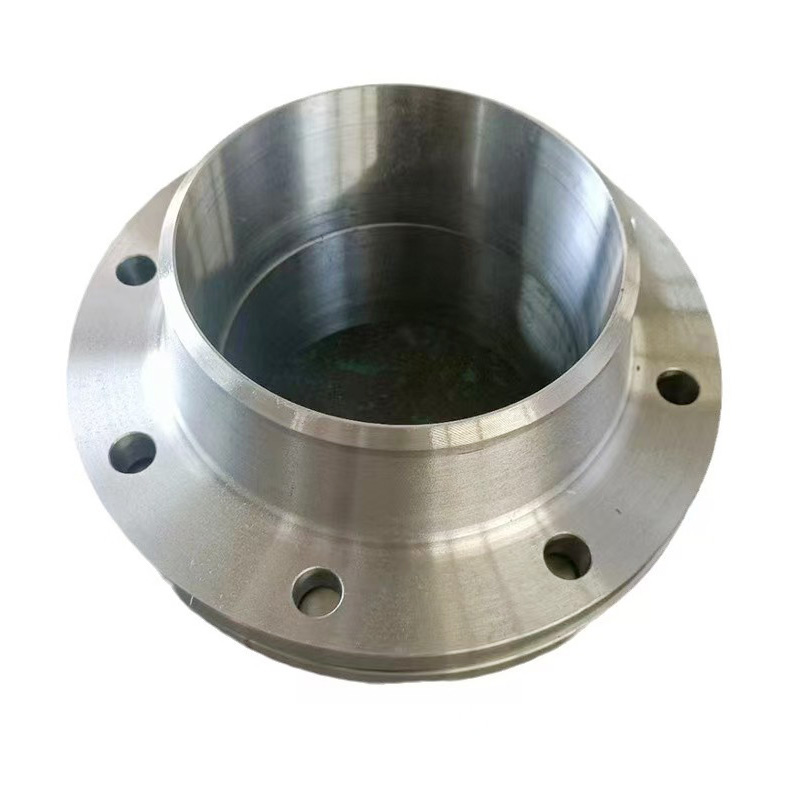
AWeld Neck Flange (WN Flange)is a type of piping flange designed to be welded to a pipe or ...
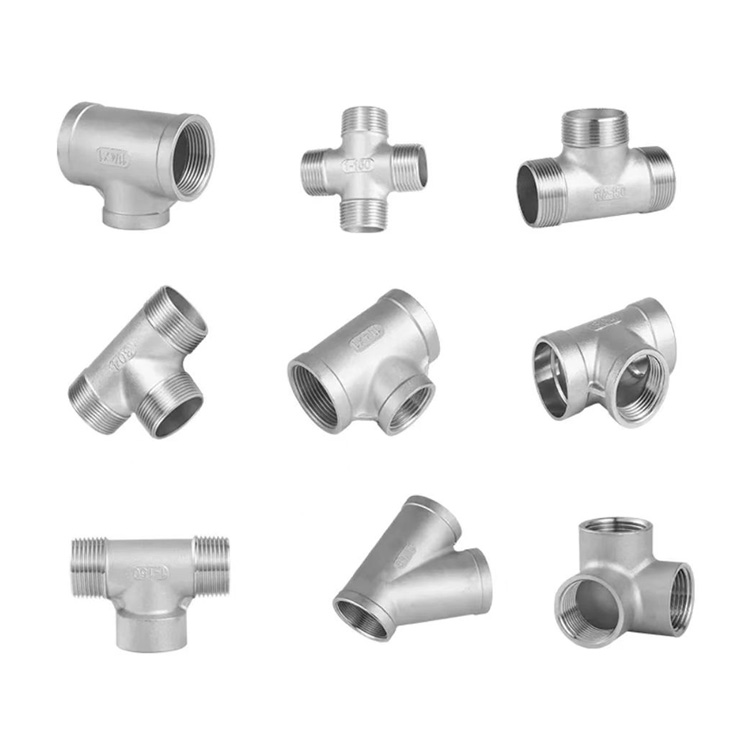
Socket fittings are essential components in piping systems, designed to connect, branch, or...
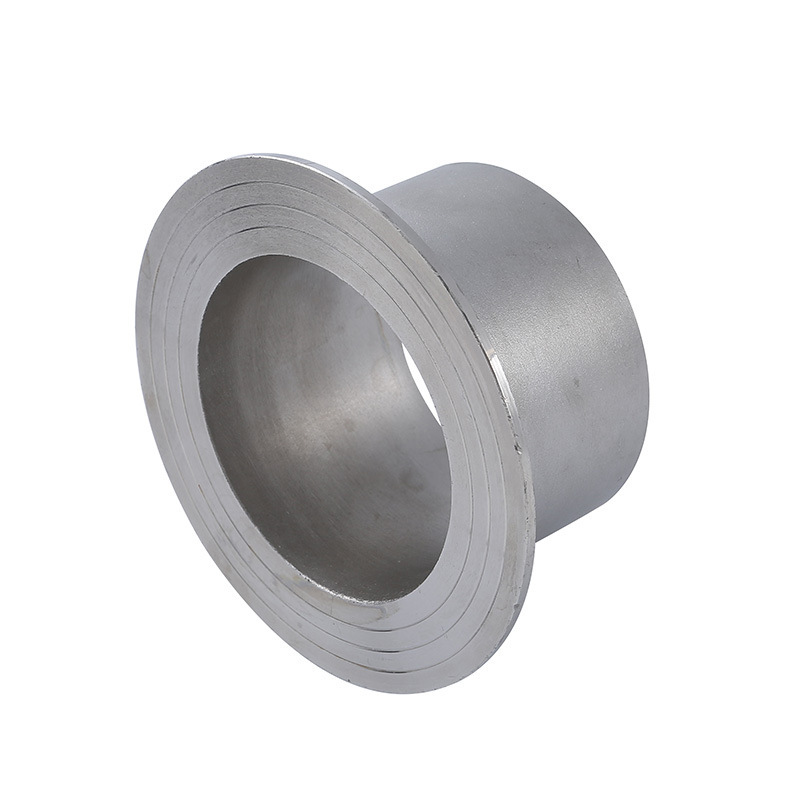
Welding ring is a commonly used metal ring component in pipeline connection or equipment do...
Welding ring is a pipe fitting used for pipeline connection. The following is its detailed ...