Flange Metal Hose: Flexible Stainless Steel Hose Assemblies for Vibration and Misalignment
2026-10-17 14:32:42
Rotating equipment transmits vibration into piping, and piping transmits load back into rotating equipment. A flange metal hose breaks that loop. Combining a corrugated stainless inner core, a braided reinforcement layer and flanged end connections in one assembly, it is the simplest way to isolate vibration, absorb thermal growth and tolerate the small misalignments that inevitably occur between a pump nozzle and its connecting line.

Anatomy of a Flanged Metal Hose Assembly
Inner core – an annular or helical corrugated stainless hose, typically AISI 304, 316L or 321, providing flexibility and pressure containment.
Braid layer – one or two layers of stainless wire braid that restrain pressure-induced extension and raise the burst rating.
End fittings – weld-neck or slip-on flanges to ANSI, DIN, JIS or GB, or threaded, camlock and union ends for smaller assemblies.
Optional accessories – internal interlock liners for high-velocity or abrasive flow, external protective sleeves, fire-safe wraps and anti-torsion tags.
Because the assembly is delivered pre-tested and prefabricated, installation is a matter of bolting two flanges — no field welding, no hot work permit and no post-installation radiography.
Where Flanged Metal Hose Outperforms Rigid Pipe
| Problem | Rigid piping | Flanged metal hose |
|---|---|---|
| Pump / compressor vibration | Transmitted to pipe and supports | Damped at the connector |
| Small misalignment | Forced fit, residual stress | Absorbed without stress |
| Thermal growth of equipment | Nozzle overload | Absorbed by hose deflection |
| Frequent dismantling | Cut and re-weld | Unbolt and replace |
| Noise transmission | Structure-borne noise | Noticeably reduced |
Selection Parameters
Standard assemblies cover nominal bores from roughly DN15 to DN300, with pressure ratings from vacuum to 16, 25 or 40 bar depending on bore, braid and corrugation profile. Temperature capability is set by the hose and braid material — austenitic stainless typically covers −196°C to +600°C in clean service — while flange rating must be de-rated according to the hose assembly pressure–temperature table rather than the flange table alone.
Bore size – match the line size; undersizing a connector raises velocity and pressure drop.
Length – the live length must be sufficient for the expected movement; as a guide, minimum live length is proportional to movement and bore.
Minimum bend radius – static and dynamic values differ; repeated flexing requires the dynamic radius.
Medium compatibility – confirm chloride content and temperature when selecting 304 versus 316L.
Installation Rules
Three rules prevent most hose failures: do not twist, do not over-bend, and do not let the hose carry weight.
Install in a plane of bending and never rotate the hose to close a bolt-hole mismatch; torsion is the leading failure cause.
Respect the minimum bend radius and avoid sharp bends close to the end fittings, where the strain concentrates.
Support the adjacent piping independently so the hose carries no dead weight or external load.
Protect against weld spatter, mechanical impact and, for buried or outdoor service, against trapped moisture.
For high-velocity, two-phase or abrasive media, specify an internal liner and confirm the flow direction with the manufacturer.
Typical Applications
Pump and compressor suction and discharge connectors, heat exchanger and chiller connections, tank farm loading arms and transfer lines, steam and hot water distribution, chemical dosing skids, marine and engine room piping, and retrofit projects where equipment has been replaced with slightly different nozzle positions.
Hebei Tianlong Pipeline Equipment Co., Ltd. manufactures and stocks these fittings in carbon steel, stainless steel and alloy steel to GB, ANSI, JIS, DIN and BS standards, with in-house forging, heat treatment, machining and non-destructive testing.
Frequently Asked Questions
Can a metal hose replace an expansion joint?
For short runs with moderate movement and vibration, yes. For large thermal movements, high pressure thrust or thousands of cycles, a purpose-designed bellows expansion joint is usually the correct engineering choice.
What is the difference between single braid and double braid?
Double braid roughly doubles the pressure-retaining capability and resists pressure-induced elongation, at the cost of flexibility and a larger minimum bend radius.
How do I size the length of a flexible connector?
Start from the expected movement in each direction and the bore, then apply the manufacturer's minimum live-length chart, adding margin for installation tolerance. Never stretch a hose to make up a piping gap.
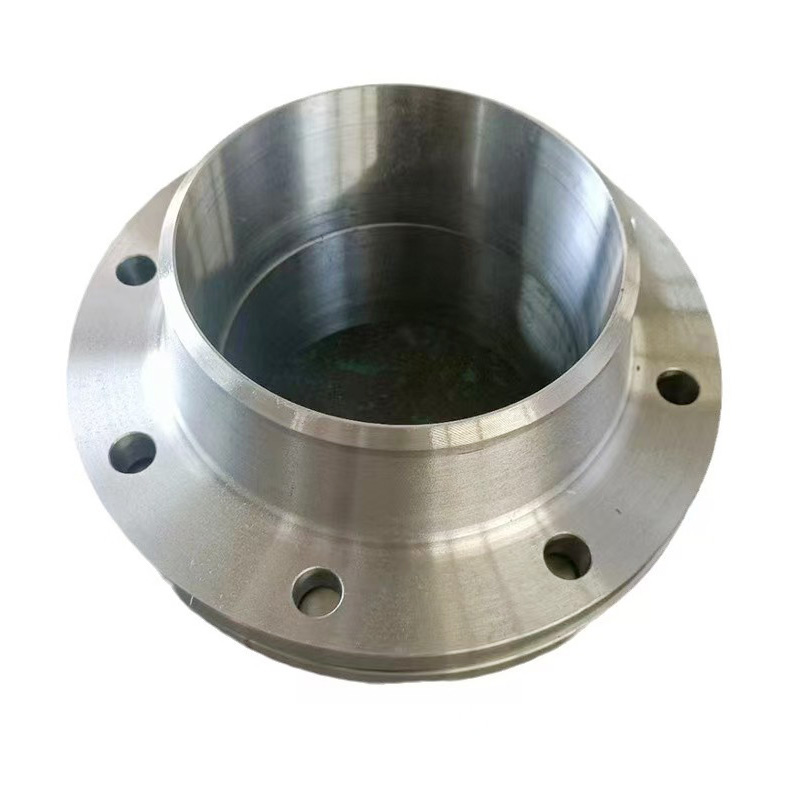
AWeld Neck Flange (WN Flange)is a type of piping flange designed to be welded to a pipe or ...
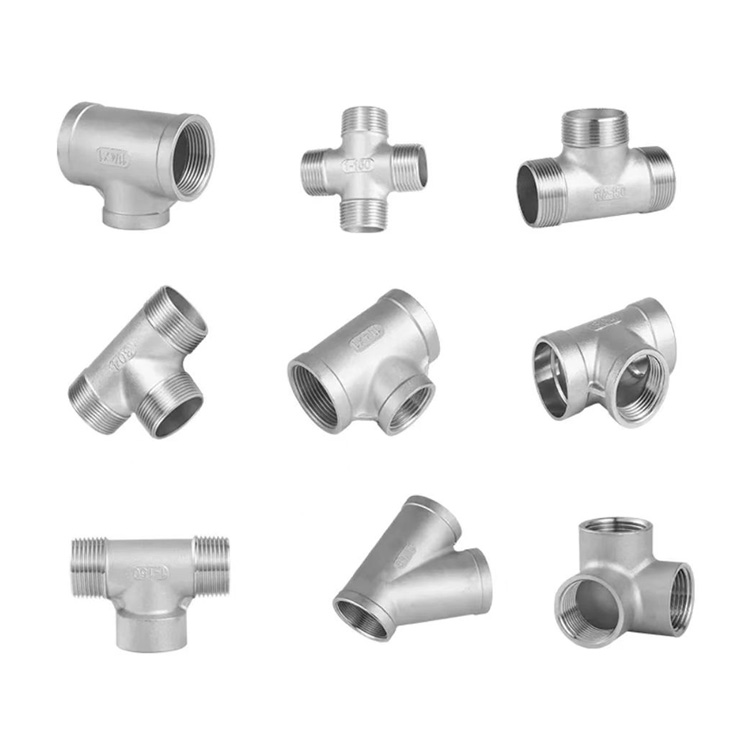
Socket fittings are essential components in piping systems, designed to connect, branch, or...
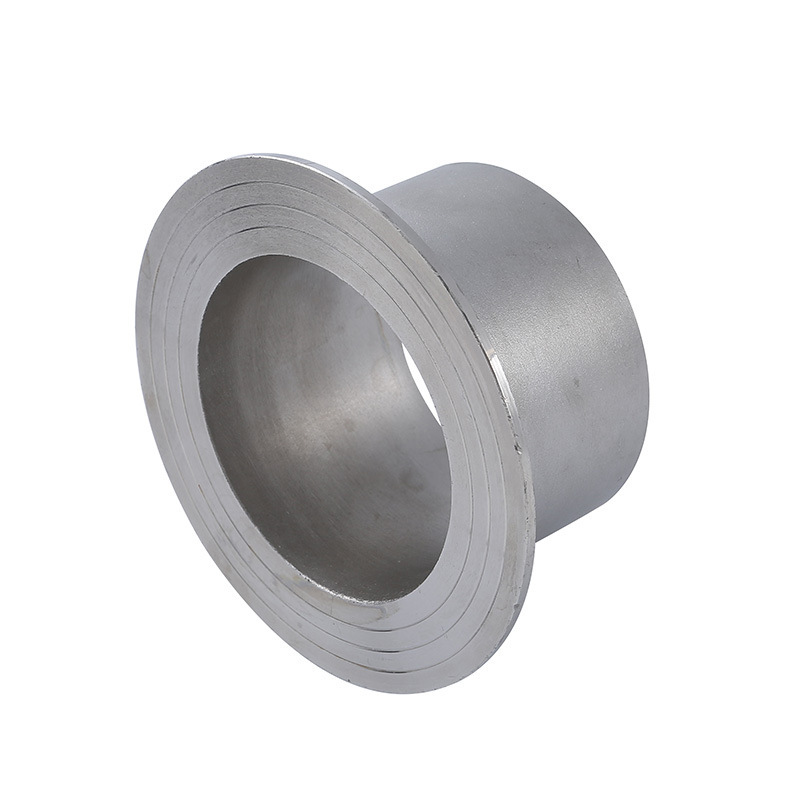
Welding ring is a commonly used metal ring component in pipeline connection or equipment do...
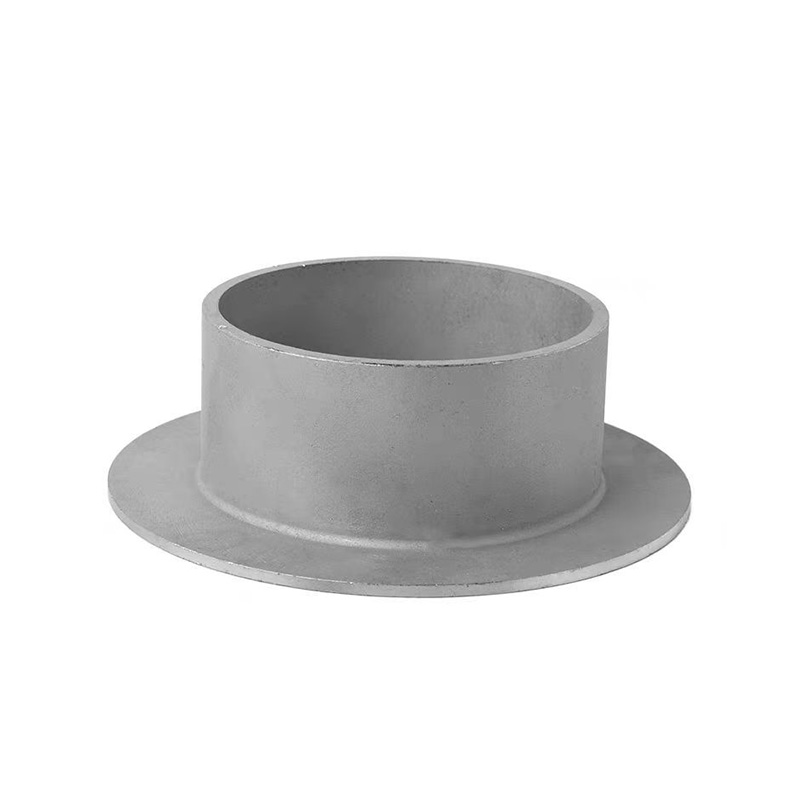
Welding ring is a pipe fitting used for pipeline connection. The following is its detailed ...