Stainless Steel Tee Fittings for Industrial Piping Systems
2026-09-14 17:50:36
Every complex piping network reaches a point where one line must become two. That transition point is almost always a tee fitting — a simple component that carries enormous responsibility for the integrity of the entire system. When a tee fails under pressure, the consequences can be severe: fluid escape, unplanned shutdowns, and potentially dangerous working conditions.
This article examines stainless steel tees from a practical standpoint: the types available, how they are manufactured, how to specify them correctly, and what to look for when evaluating suppliers.
What Does a Tee Fitting Do?
A tee connects three pipe sections: one run (the straight section) and one branch (the perpendicular outlet). Fluid can flow straight through the run, redirect into the branch, or split between both paths. The geometry creates a stress concentration at the intersection — the branch opening weakens the pipe wall — which is why tees are designed and tested to handle the same pressure as the connecting pipe.
In stainless steel systems, this tee serves a dual role: structural connection and corrosion barrier. The stainless material protects the connection point from the aggressive fluids or environments moving through the system.
Types of Tee Fittings
Equal Tee
The equal tee has a branch diameter that matches the run diameter. All
three openings are the same size, making it the simplest branching
component. Equal tees appear everywhere in piping systems where a
full-size branch is needed. They are manufactured by forging,
fabrications from plates, or formed from pipe sections.
Reducing Tee
The reducing tee has a branch diameter smaller than the run diameter.
The run maintains its full size through the fitting, while the branch
steps down to a smaller pipe size. Reducing tees are essential in
systems where not every branch needs the full capacity of the main line.
For example, a 6-inch main line might have a 4-inch reducing tee to
supply a 4-inch branch while keeping the 6-inch run intact for the next
downstream connection.
Barred Tee (also known as coned tee or swage tee)
A barred tee has a internal bar or plate welded across the run to
prevent turbulent flow across the branch opening. The bar, typically
positioned at the center of the branch, is particularly useful in slurry
or solid-carrying applications where flow across the branch could cause
erosion or blockage. The bar is flush with the interior surface to
minimize flow disruption.
Wye Tee (or Sweep Tee)
The wye tee uses a 45-degree lateral branch instead of a perpendicular
90-degree branch. This gradual angle dramatically reduces pressure drop
and turbulence compared to a standard tee, making it ideal for
low-pressure-drop applications or slurry systems. However, wye tees are
larger and more expensive than standard tees, and they require more
installation space.
Manufacturing Methods
Seamless
Seamless tees are made from a single piece of steel using hot pushing or
cold forming. The entire tee has no weld seams, eliminating potential
failure points at the intersection. Seamless tees are the preferred
choice for high-pressure applications and critical service in the oil
and gas, chemical, and power industries. They cost more to produce but
offer superior structural integrity.
Welded (Fabricated)
Welded tees are fabricated by cutting a hole in a pipe section and
welding a branch fitting or pipe cap onto the opening. The welded
intersection is then ground smooth on the interior. Modern fabrication
with automated welding equipment produces consistent, high-quality
seams, but the weld itself remains a stress concentration point. Welded
tees are common in large-diameter, lower-pressure systems where
fabrication cost savings are significant.
Forged
Forged tees are made by heating steel and shaping it under extreme
pressure. Forging produces a fine grain structure in the steel,
improving strength and impact resistance. Forged tees are typically used
for small-bore, high-pressure applications where mechanical properties
are paramount.
Dimensions and Standards
Stainless steel tees must conform to dimensional standards that ensure compatibility with the piping system. The governing standards specify center-to-end dimensions, wall thickness at each opening, and bevel preparations for welding.
For butt-weld tees, ASME B16.9 defines the standard dimensions for factory-made wrought fittings. This standard covers both equal and reducing tees across a wide range of sizes and schedules. For socket weld and threaded tees, ASME B16.11 governs dimensions and pressure ratings.
European projects typically reference EN 10253-2, which covers specific inspection requirements for butt-welding fittings. Japanese projects use JIS B2311 for general purpose steel pipe fittings and JIS B2312 for high-strength steel pipe fittings.
Pressure Drop Considerations
Fluid flowing through a tee experiences pressure loss due to the change in direction and cross-sectional area. The amount of loss depends on the tee geometry and the flow configuration:
Flow continuing straight through the run has the lowest pressure drop
Flow turning 90 degrees into the branch has the highest pressure drop
Reducing tees can increase pressure drop compared to equal tees due to the area change geometry
In systems where pumping energy costs are significant — long-distance pipelines, large water distribution networks — engineers may specify wye tees instead of standard tees to minimize energy consumption over the life of the system.
Reinforcement for Branch Connections
When a branch is added to a pipe, the opening creates a stress concentration that can weaken the system. Code-recognized reinforcement methods include:
Increased wall thickness — Using a fitting with heavier walls than the connecting pipe, which is built into the tee geometry.
Reinforcement pads — Full-encirclement or partial reinforcement pads welded around the branch opening outside the pipe. Common in fabricated branch connections.
Extruded outlets — Branch connections formed by hot-extruding a collar from the main pipe, creating an integral reinforcement without adding separate pieces.
Material Selection for Stainless Tees
Grade selection follows the same logic as other stainless fittings:
Type 304 — General-purpose, suitable for food processing, dairy, and mild chemical environments
Type 316 — Superior chloride resistance for marine, pharmaceutical, and coastal applications
Type 321 — Stabilized grade for high-temperature applications where resistance to sensitization is needed
Duplex 2205 — High strength and excellent chloride stress corrosion cracking resistance for demanding offshore and desalination applications
Always match the tee material to the material of the connecting pipe and to the corrosive nature of the service fluid.
Quality Checks Before Installation
Before installing stainless tees in your piping system, verify:
Wall thickness matches the specified schedule at the run and branch
Inside diameter is free of weld spatter, excessive reinforcement, or other obstructions
Bevel angles and root faces match the connecting pipe for proper weld penetration
Surface finish is appropriate for the service — pickled and passivated for corrosive environments
Heat number traceability exists back to mill test certificates
Conclusion
Stainless steel tee fittings may look straightforward, but getting them right requires attention to detail at every stage: type selection, manufacturing method, dimensional compliance, material grade, and quality verification. Equal tees for full-size branches, reducing tees when the branch is smaller, and wye tees when minimizing pressure drop is the priority.
Sourcing from a qualified stainless steel tee manufacturer with proper certifications, traceability documentation, and quality control processes ensures that every tee in your system performs as designed under the conditions it will face.
References
References:
ASME B16.9-2018, Factory-Made Wrought Buttwelding Fittings, The American Society of Mechanical Engineers
ASME B31.3-2022, Process Piping, The American Society of Mechanical Engineers
ASTM A403/A403M-20, Standard Specification for Wrought Austenitic Stainless Steel Piping Fittings, ASTM International
EN 10253-2:2008, Butt-welding pipe fittings Part 2: Non-alloy and
ferromagnetic alloy steels with specific inspection requirements,
European Committee for Standardization
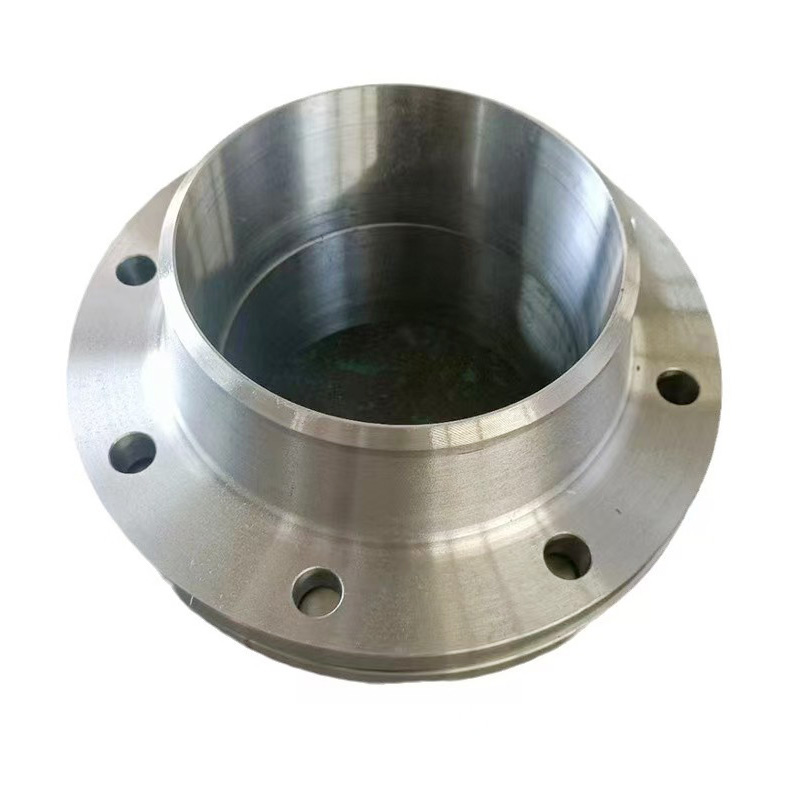
AWeld Neck Flange (WN Flange)is a type of piping flange designed to be welded to a pipe or ...
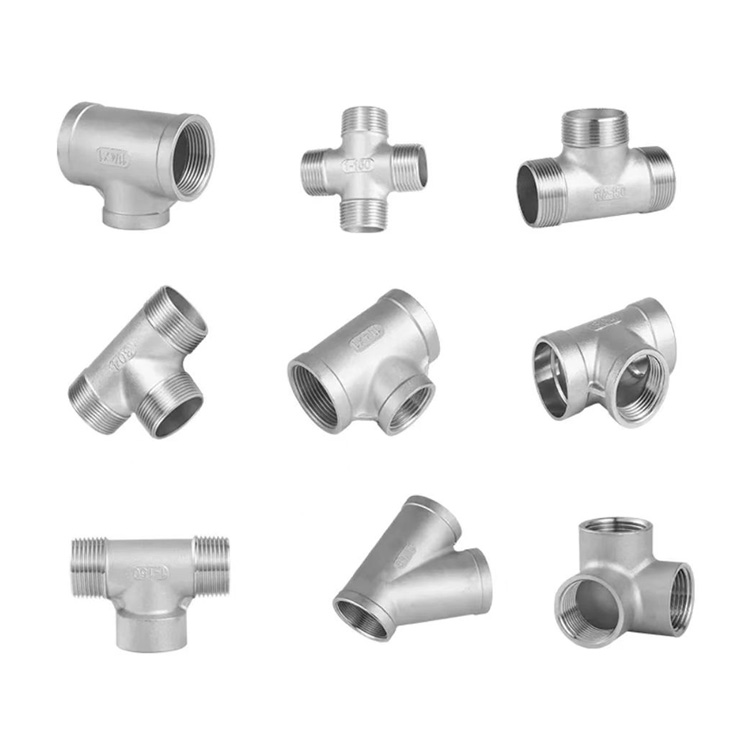
Socket fittings are essential components in piping systems, designed to connect, branch, or...
Welding ring is a commonly used metal ring component in pipeline connection or equipment do...
Welding ring is a pipe fitting used for pipeline connection. The following is its detailed ...