Corrosion Resistance of Weld Neck Flanges in Offshore Projects
2025-11-25 22:18:31
At the forefront of offshore engineering, the Weld Neck Flange is one of the few connection types capable of surviving intense marine conditions over extended service periods. Offshore systems—ranging from subsea pipelines to riser modules and processing skids—demand components that can endure continuous exposure to moisture, salinity, cyclic loading, and high internal pressure. For a Manufacturer operating with industrial-scale Production and bulk delivery capacity, corrosion performance is a core metric that determines whether a flange can meet offshore project expectations.
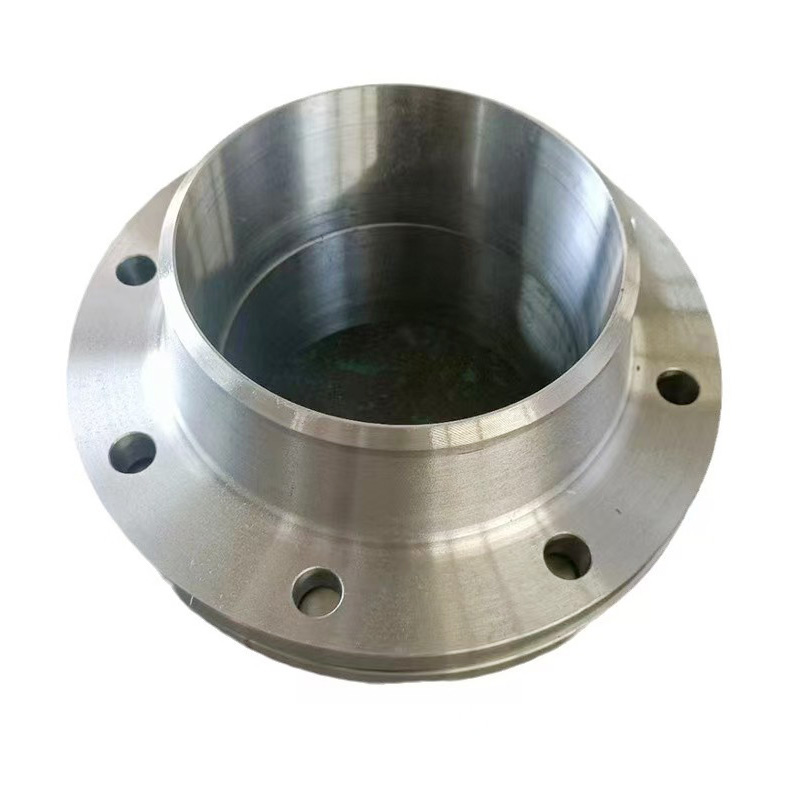
This article presents a deeply restructured perspective on corrosion behavior, material science, manufacturing quality, and protective strategies related to Weld Neck Flanges used in marine and offshore installations.
1. Offshore Advantages of Weld Neck Flange Geometry
The signature long-tapered neck and integrated weld transition are essential features that distinguish Weld Neck Flanges in high-stress marine systems. These characteristics provide:
·Even distribution of mechanical stresses at the weld joint
·Significant fatigue resistance, ideal for wave-driven vibration and platform movement
·A highly stable sealing surface that maintains pressure integrity under variable load conditions
·Long-term corrosion robustness, thanks to thickness continuity and minimized crevice zones
For manufacturers producing large-volume flange orders, maintaining consistent geometry and metallurgical quality throughout the Production cycle directly influences offshore corrosion resistance.
2. Dominant Corrosion Threats in Marine Environments
Offshore projects expose metal components to a unique spectrum of degradation mechanisms. A Weld Neck Flange must withstand the following:
a. Chloride Attack (Pitting & Crevice Corrosion)
Chlorides penetrate protective films on stainless steel or coated carbon steel, initiating localized pits that can destabilize entire connections if not controlled.
b. Galvanic Interaction
Connecting dissimilar alloys—such as a stainless Weld Neck Flange joined to carbon steel piping—creates electrical potential differences that accelerate metal loss.
c. Stress Corrosion Cracking
Weld-affected zones are especially vulnerable to cracking when tensile stress combines with chloride-rich seawater and elevated temperatures.
d. MIC (Microbiologically Influenced Corrosion)
Offshore areas with low flow or stagnant seawater can host bacterial colonies, which promote corrosive environments beneath biofilm deposits.
Each mechanism demands careful material selection and manufacturing oversight to safeguard the flange’s long-term performance.
3. Offshore-Suitable Materials for Weld Neck Flange Production
The durability of a flange in marine environments is heavily influenced by alloy composition and metallurgical stability. Common offshore-approved materials include:
a. Austenitic Stainless Steels (304L, 316L)
These alloys provide solid baseline corrosion resistance, with molybdenum in 316L enhancing pitting defense.
b. Duplex and Super Duplex Grades
Duplex steels (e.g., 2205) and super duplex alloys (e.g., 2507) offer superior mechanical strength and exceptional SCC resistance—ideal for subsea and splash-zone exposure.
c. Nickel-Based Alloys
High-performance materials such as Inconel and Monel resist severe corrosion at both high temperature and high salinity, making them suitable for demanding offshore operations.
d. Coated Carbon Steel
Still widely used for cost efficiency, but requires robust protective systems to compensate for its natural susceptibility to corrosion.
A Manufacturer capable of controlled Production environments ensures that alloy integrity and surface cleanliness are consistent, which significantly elevates corrosion resistance.
4. Surface Protection Techniques for Flange Longevity
Material choice is only part of the equation. Engineering external and internal protections significantly enhances the performance of a Weld Neck Flange in harsh offshore systems.
a. High-Performance Coatings
Fusion-bonded epoxy (FBE), phenolic coatings, and marine-grade epoxy layers create durable barriers between the metal surface and surrounding seawater.
b. Stainless Steel Passivation
Chemical passivation deepens and stabilizes the chromium-rich oxide layer, improving resistance to chloride intrusion.
c. Thermal Spray Aluminum (TSA)
A preferred method for offshore structures, TSA provides a sacrificial protection layer with long-term effectiveness.
d. Cathodic Protection
Using sacrificial anodes or controlled current systems prevents electrochemical corrosion on submerged components.
Together, these treatments help extend the operational life of flange assemblies in marine conditions.
5. Manufacturing Quality: A Key Factor in Corrosion Resistance
Even the best materials cannot perform optimally without precise manufacturing. Offshore-quality Weld Neck Flanges must undergo:
·Accurate machining to achieve the correct sealing face roughness
·Controlled heat treatment to relieve internal stress and improve weldability
·High-precision drilling and bolt-hole alignment
·Rigorous non-destructive testing (NDT) for weld and material verification
·Dimensional compliance with offshore standards such as ASME, API, and EN norms
A Manufacturer with strong Production capacity ensures each flange maintains uniform wall thickness, surface quality, and metallurgical consistency—all crucial to corrosion resistance.
6. Installation and Maintenance in Offshore Applications
Flange performance also depends on installation practices:
·Maintain clean, undamaged sealing faces
·Choose gaskets compatible with seawater exposure
·Apply precise bolt torque to avoid creating crevice regions
·Inspect weld transitions for surface defects
·Schedule regular corrosion monitoring for long-term platforms
Correct installation mitigates many corrosion pathways before they begin.
Conclusion: Long-Term Reliability Built on Engineering Precision
A well-designed Weld Neck Flange tailored for offshore conditions is more than a mechanical connector—it is a corrosion-resistant structural asset. The combination of suitable materials, surface engineering, precise manufacturing, and proper offshore installation ensures that these flanges provide decades of reliable service.
For high-performance marine systems, choosing a corrosion-resistant Weld Neck Flange backed by Manufacturing expertise and robust Production capability is essential for safety and operational stability.
Weld Neck Flange performance begins with materials—and succeeds through engineering.
References
GB/T 7714:Duplex stainless steels: microstructure, properties and applications[M]. Elsevier, 1997.
MLA:Gunn, Robert, ed. Duplex stainless steels: microstructure, properties and applications. Elsevier, 1997.
APA:Gunn, R. (Ed.). (1997). Duplex stainless steels: microstructure, properties and applications. Elsevier.
AWeld Neck Flange (WN Flange)is a type of piping flange designed to be welded to a pipe or ...
Socket fittings are essential components in piping systems, designed to connect, branch, or...
Welding ring is a commonly used metal ring component in pipeline connection or equipment do...
Welding ring is a pipe fitting used for pipeline connection. The following is its detailed ...